Accessibility is Abundance: A pop-up Equitable Wellness podcast
Where else to watch or listen
YouTube | Substack | Apple Podcasts | Spotify
Table of Contents
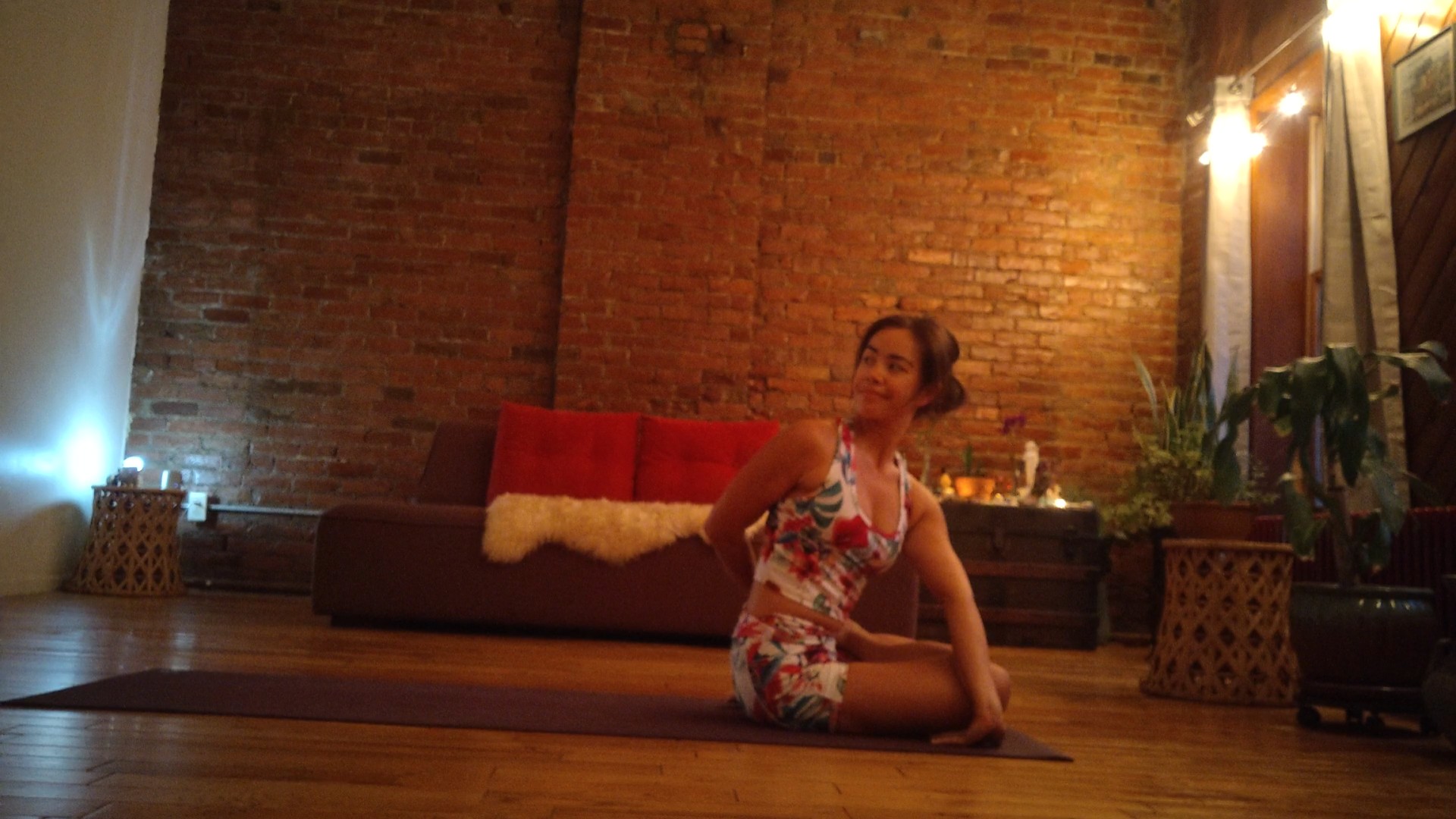
Let’s talk about accessibility. I feel anger when I browse the website of the spa where I once worked. Pictured in the Thai Massage caption is a white woman performing a Thai Massage stretch. However, the description and the write-up of the service show words that are my own words I had drafted. Yet nowhere in the picture is my small, petite, brown or golden body as an identifying practitioner of Southeast Asian descent, performing the service. Instead, the photo for the service is of a white woman. The words are my own.
And I worked at that spa for four years, with photos of me providing that service on file.
There are gracious pictures on the website of black bodies in the community and private spaces, but the picture of the Asian body for the Asian service does not appear. Only the Asian’s words to describe or sell the service.
When I practiced Shiatsu and Thai massage as a private practitioner, I contracted a Thai woman ancestrally ordained to give Thai massage. She grew up in the culture of performing healing arts services freely for her family, her elders, her siblings. It was a culture she had grown up in. As a generous business owner, I gave her 80% of the fees of the service, plus her tips, using my platform, website, marketing, social media accounts, and email list contacts to expose her to the greater community. At the time, my colleague was in grad school, and the hourly rate for these services was a generous offer. But I was always grateful for her because I knew that, as I was complicit in culturally appropriating the healing art, she was someone who deserved all the proceeds.
(Amongst our colonial capitalist, cisgender, and ableist ideals of forcing licensure requirements by the state, often at exorbitant rates of time and energy that are inaccessible to people of ancestral practice.)
But let’s talk about accessibility.
When I worked at said spa (where the therapists don’t come home with 80% of the listed service price), I was briefly part of a work group in spring of 2022 that focused on accessibility standards for the spa. We called it the Equity work group.
Why would that be important?
Why would a spa consider how someone in a wheelchair might receive massage therapy? Why would it be important to consider how somebody transgender should be guided to the locker rooms? How they should be addressed? Why would it be important to consider what pronouns and what names might be used in an intake form? Why might it be important to consider how someone of Black skin and hair is guided through services and oils that might not be the best for their skin and hair types? Why might it be important to consider how to drape a bigger body who might require more than one towel and might require an XXL bathrobe?
It’s important because it teaches… Accessibility. But more importantly, it teaches Collective Care. It teaches collective liberation. It teaches that “luxury” services and healing arts and centers for bringing care to the forefront of conversation are also places that can put elitism and classism to the side. Accessibility is important because we understand that in order to help our children, we’re looking out for All children.
So the danger of articles titled “The trap of accessibility”1 is that we gently remove a greater conversation piece from our businesses. We’re centering not a conversation on caring for all. Instead, we are centering care for ourselves, which is good and well if it allows us to be of service. The danger is that it also minimizes those who may also stand the greatest chance to step into the transformation that you want to offer. And to heal.
Care for all doesn’t have to come at our own self-extraction, because it is a practice. In our capitalist culture, we are taught that we should always get more for less. We are accustomed to seeing the wealthy profit more and those “unresourced” suffering increasingly, if we’re not globally eradicating their bloodlines or their lands. We are accustomed to saying we shouldn’t “race to the bottom,” but why don’t we, for once, consider that those at the “bottom” are the ones most deserving of the most loving care and attention, and equally deserving of high-ticket transformation.2
I think when we start saying, “I don’t serve your kind here,” it’s starting on the verge of exclusion, and it’s starting on the verge of perpetuating oppression. To do away with the system, we have to acknowledge that it is built on the backs of others who don’t deserve the suffering they go through or have historically gone through. No one deserves to be bought or chained. No one deserves to have their homes blown up or their lands stolen. Turning down others might have the noble intention of boundaries and self-respect, resourcing, and capacity, but it sits at a dangerous precipice.
When we gently put othering aside or invisibilize it, we are once again corroborating the story we are sold that capitalism is the only way.
So what is the solution?
It starts by saying we can have both accessibility and abundance. It starts by saying that, while collective care and collective liberation and our ongoing thoughts for collective care are “inconvenient,” we voluntarily undergo the “inconvenience” because we are changing hands from an oppression-centered format to an anti-oppressive format. We’re saying:
- We’re not shaming you for having the body you have.
- We’re not shaming you for having the gender you have.
- We’re not shaming you for having the pronouns or the name that you have.
- We’re not shaming you for having the skin or the hair that you have.
- We’re not shaming you for the love that you have.
- We’re not shaming you for the wallet that you have.
You are welcomed here too. Let’s find a way to let Collective Care care for you.
Let’s start opening our minds to solutions of new designs and keep the conversation going.
Practically speaking, what this looks like is planting the seeds of a collective care-centered business or a generous business.
We can talk more about this another day, but for now, the simplest solutions I’ve seen in practice include having a “pay-it-forward” rate to supplement rates for those in need. It’s based on the ideology that everyone deserves healing.3 You can see the acupuncturist’s website for more information.
It also involves scrutinizing, studying, and investigating businesses that make this work.
As a small example, I work in a web design agency where I see that there are people and organizations who purchase five-figure websites, and then there are also people spending $0 a month or $18 a month for their hosting because they might need a sliding scale rate for some amount of time until they can pay at the standard rate.
Generosity, like water in a permaculture garden, can spread, slow, and sink.4
I am no expert, but I know that there is another way. There are likely countless other ways.
When it comes to the spa I mentioned at the beginning5, there is a part of me that is ashamed. Shame isn’t really the right word, but it is lamentable that the Equity work group didn’t carry on. All of us had such high ideals in the 2020 wake of BLM and reform on the level of collective awareness. Anti-Asian hate. There was some “progress,” but we’ve seen now that we obviously didn’t carry through to what collective liberation really looks like and what anti-oppression really looks like. Not for the U.S. and certainly not on a global level.
The narrative of the Global North colonizing the Global South continues.
There is a great amount of suffering and toll at this moment, which feels like a Tower moment before the rebuilding. Threshold times.
It’s time to keep actions and regards for collective care going.
In our 2022 forming of the leadership group, we proclaimed ourselves as focused on and devoted to equity and inclusion. We came together to look at equity within the spa environment, aiming to maintain our ideals through monthly meetings, trainings, working with consultants, implementing organizational standards, an equity report, a staff book club, and many ongoing projects.
We charged ourselves as a group committed to continuously learning while holding ourselves, the business, and individuals accountable.
It’s lamentable or regrettable, again, that to my knowledge this group no longer exists.
But these seeds of the conversation were what prompted me to start the Equitable Wellness podcast. While I’m currently taking a break, I’m convincing myself now that the conversation must go forward and that there must be a Season Two. Please contact me if you want your voice in liberation work to be heard.
This is the old statement I had drafted about what we believe. (Which, I admit, is so 2022.) If you still believe in this, I invite you to forward.
“What we believe:
We believe in establishing and maintaining an equitable environment at [the spa] in which the community, including staff and clients, feel respected and valued. Our group firmly believes in taking action to address, counter, and minimize inequities caused by political and socioeconomic issues including racism, white supremacy, patriarchy, and body-based oppression.* We want to create the most welcome environment for community members of all ages, races, gender identities, abilities, socioeconomic status, sexual orientations, languages, national origins, lived experiences, and all other aspects of diverse identities.
*Body-based oppression includes, but is not limited to, the following: ableism, ageism, sexism, homophobia, transphobia, fatphobia, racism, and discrimination and microaggressions against communities such as LGBTQIA+, People of Color (Black, Indigenous, Latinx, Asian, Pacific Islander, Middle Eastern, Multiracial, and international communities), gender identities and expression, religious groups, individuals with mental or physical health challenges, people with disabilities, neurodivergent communities, and the intersectionality for all of the above.”
I think to myself now, in 2026, Why should classism be excluded from this list? Why should poverty be excluded from this list?
Could you say that again, Megan? What did you say?
Yeah, absolutely, I was really caught by the comment or the part of your writing where you said, accessibility and abundance can coexist, when I think they’re one and the same. Accessibility is abundance, and abundance is accessibility.
And they’re practically synonyms for me. Because literally, if you’re providing access, you’re welcoming more diversity and more thought into the space that you’re allowing access to.
Overall, I really, really, really appreciate your writing on this topic, and I had forgotten that you did that work with the group that you were in. I don’t think I read too much about it, or we didn’t discuss it much at the time. But I totally, totally see the through line to what you’re doing now.
And I’m just so grateful because even as I’m starting to dive into all of the massage therapy content creators on LinkedIn, nobody’s discussing anything like this. They’re stuck in very important topics, but still totally grounded in capitalism.
They’re doing good work, but it’s still coming from the white woman massage therapist perspective, or the white man perspective in massage therapy, which are valuable. But they are only one category of us, and I don’t think that I’ve got. I have not gotten the impression that many of them are even thinking about these topics in the way that you are.
So I know LinkedIn is bleh LinkedIn, but that is another place where I’m more than happy to share your work there and maybe get conversations going. I don’t know, but it really needs to be happening because because me doing the work that I’m doing here. Like, very early on in, even just my licensure, but maybe maybe when I was still a student, before I got my license, I was.
I was becoming deeply concerned about how to serve—you and I have talked about this—how to serve both. The tourist who brings the money for the whole town, not just massage therapy, but all the people who the tourists rely on for their food, their cleaning, their bullshit while they’re here (their their bullshit with sparkles on it), like, you know, those really? And it’s not to say… We have great tourist experiences here in Taos, of course.
But like, it was very clear to me, especially in entering my first spa gig, that the space between “what we can charge” a tourist versus what the locals can afford is is in… It’s insurmountable. Like the folks here are used to their 40 dollar massages, like 40 dollars one hour massages.
Like, and I hate being able to say that I can’t do that, and I did, and actually I have done that. I don’t know if… I’ve gone down to 50, I’ve gone down to 50.
But that discrepancy is really, really, really important, and especially where you key in on who, from our perspective, who might be more deserving? Is it the people who rush in with money to take advantage and possibly extract and exploit a tiny little town like Taos and what we have to offer, or is it the people who keep the town moving? And growing and changing and holding on to the very much Taoseño and Taos Pueblo beliefs and practices and livelihoods?
For me, that’s a no brainer.
Like, I don’t care about the Austinite who’s coming in for a vacation, or the Instagrammer influencer. You know, I’m going to, I’m going to take that happy paycheck, but I’m going to make sure that it makes it it easier for me to serve the people who are here 24-7.
Like, it’s just not even a question.
I appreciate Megan listening to my writing while on our call!
Visit Megan’s website, Nepantla Bodyworks 🐅
Resources: Equitable pricing structures examples
Add to this list! What are some of your examples? Let me know in the comments.
- Amy Kuretsky and Kim Christensen’s Constellation Acupuncture & Healing Arts:
https://www.constellationacu.com/everyone-deserves-healing - Template from Atava Garcia Swiecicki’s Ancestral Apothecary:
https://ancestral-apothecary.thinkific.com/courses/ai-placeholder - Access Point with Sahra Ali (found this through Chris Musei-Sequeira’s post on LinkedIn):
https://www.accesspointwithsahra.com/workshops - Bear Hebert’s FREELY: An Anti-Capitalist Guide To Pricing Your Work:
https://www.bearcoaches.com/freely
I binged this resource last week, and a lot of it is staying with me to process! - Megan’s massage therapy practice, Nepantla Bodyworks, is another great example:
https://nepantlabodyworks.com - I’ll post my pricing when it’s ready 😉6
“Access Intimacy” Essays by Mia Mingus
Just beginning to explore these writings.
- Access Intimacy: The Missing Link
- Access Intimacy, Interdependence and Disability Justice
- Forced Intimacy: An Ableist Norm
To be continued! + More resources
I have yet to share more on “poor-shaming,” my reservations on the Green Bottle Method, positionality + accessibility, other personal experiences, and other ideas. In the meantime, I’ll leave you with:
- Hadassah Damien’s “Lift and climb” shout-out to Angela Davis
- Adam Grant’s Worklife podcast: “Why it Pays to Raise Pay”
- The term in this writing “body-based oppression” is one I first read in Sonya Renee Taylor’s The Body Is Not An Apology: “The Body Is Not An Apology has become a refuge for millions who desire to dismantle the systems of body-based oppression that sever our experience of radical self-love, inside ourselves and in the world.”
About the Equitable Wellness podcast
Just ranked #22 in the Top Wellpreneur Podcasts by MillionPodcasts (thanks peeps; giving you a shout!). It’s also ranking in the alternative health category in Germany, lol. The podcast asks how we can be as profitable as we are equitable, and it invites practitioners and leaders dedicated to liberation work to take the mic. While currently on hiatus, reach out to be featured in Season Two, alongside a great line-up of guests to be revealed! Together let’s explore equitable practices (and pricing structures!) in holistic health and healing arts: how spas, retreat centers, holistic practitioners, and luxury services incorporate collective liberation. This podcast is perfect for business owners, artists, “wellpreneurs,” coaches, consultants, and service providers destined to find one another in solidarity for justice and healing as one.
New! Co-hosting digital strategy workshops
Today the web design agency I work for is reopening community workshops on digital strategy. These workshops will be ongoing, weekly, free, and open to clients, prospects, and the public (and co-hosted by yours truly). You’re invited! Learn more here and see you soon.

Let’s keep this conversation going!
Or email me.
- The article is actually titled “The accessibility trap.” Those who’ve been reading my newsletter know that I am a big fan of Marisa Guthrie’s work 😉 She’s been a guest on the Equitable Wellness podcast as well as a coach whom I worked with for six months, ending in December. We’re even planting seeds with other practitioners for in-person collaborations. I challenge Marisa wearing “compassionate boxing gloves” to begin to address these ideas, as I’ll do more of in my Notes in the next couple weeks. 😘
I am actively trying not to apologize for, minimize, or edit my message, but I don’t intend damage. Please subscribe to Marisa’s work and pre-order her book, The Reluctant Capitalist. She demonstrates vast experience in how she’s helped businesses survive and erode capitalism with both profit and social justice values intact. ↩︎ - Something like an e-book, a lead magnet, a tripwire, a self-paced resource, or even a group program is not the same as a 1:1 container. Let’s also address accessibility AKA abundance in this case and begin to open our minds here. 😉 ↩︎
- On Amy Kuretsky’s breathwork website (not sure if it’s still active?), she gives a great equity commitment statement. Also, from a web design perspective, I love this website. 😍
https://amykuretsky.squarespace.com/equity-commitment
Then she references the community acupuncture model with roots in Black liberation:
“Inclusive pricing structures are not new to me, as my interest in acupuncture originally stems from the Community Acupuncture movement, which has its own roots in Black liberation – with some of the first community acupuncture clinics in this country run by members of the Black Panther Party and Young Lords.”
About page:
https://amykuretsky.squarespace.com/about
Finally, here again is the statement for commitment to equity and access in healing spaces for her current practice, Constellation Acupuncture & Healing Arts:
https://www.constellationacu.com/everyone-deserves-healing ↩︎ - This is a Ryan Clover notion. I’m no permaculturist, but I learn a lot from the folks at Maple Creative. ↩︎
- Re: the spa. To the spa’s credit, today there seem to be more practitioners on staff who are people of color, non-binary or trans, and actively speaking to anti-oppression in their bios. I don’t want to be hard on my old spa either and can only hope the Work continues. ↩︎
- As of May 1, 2026, my pricing is ready! See my /pricing page! ↩︎