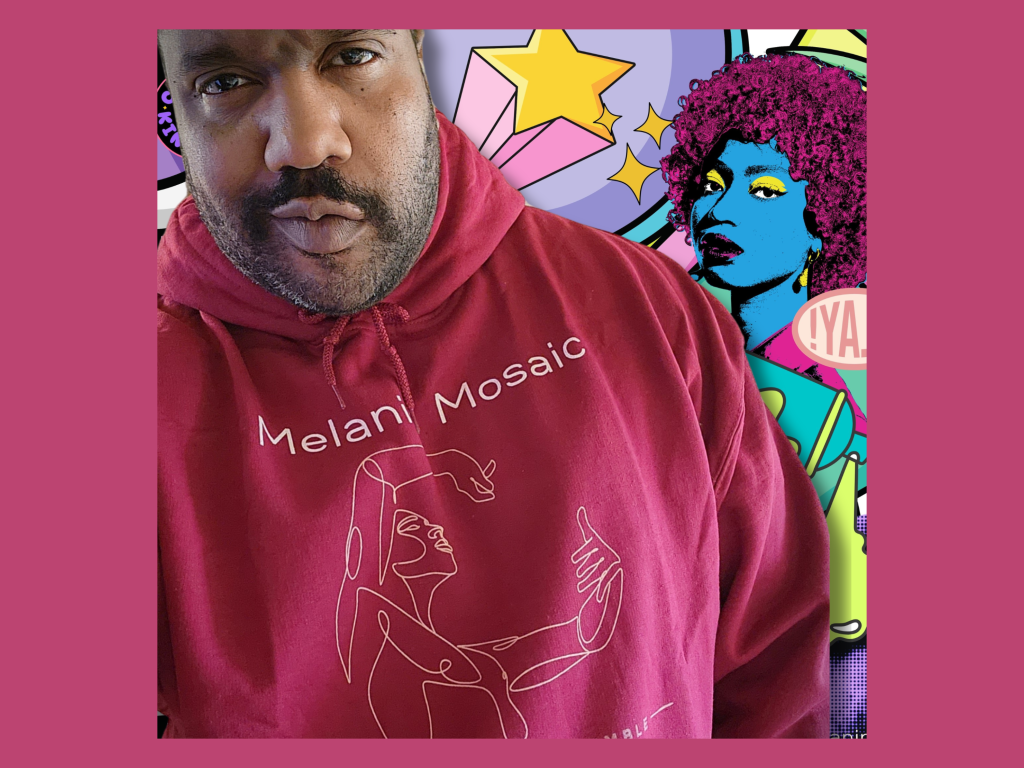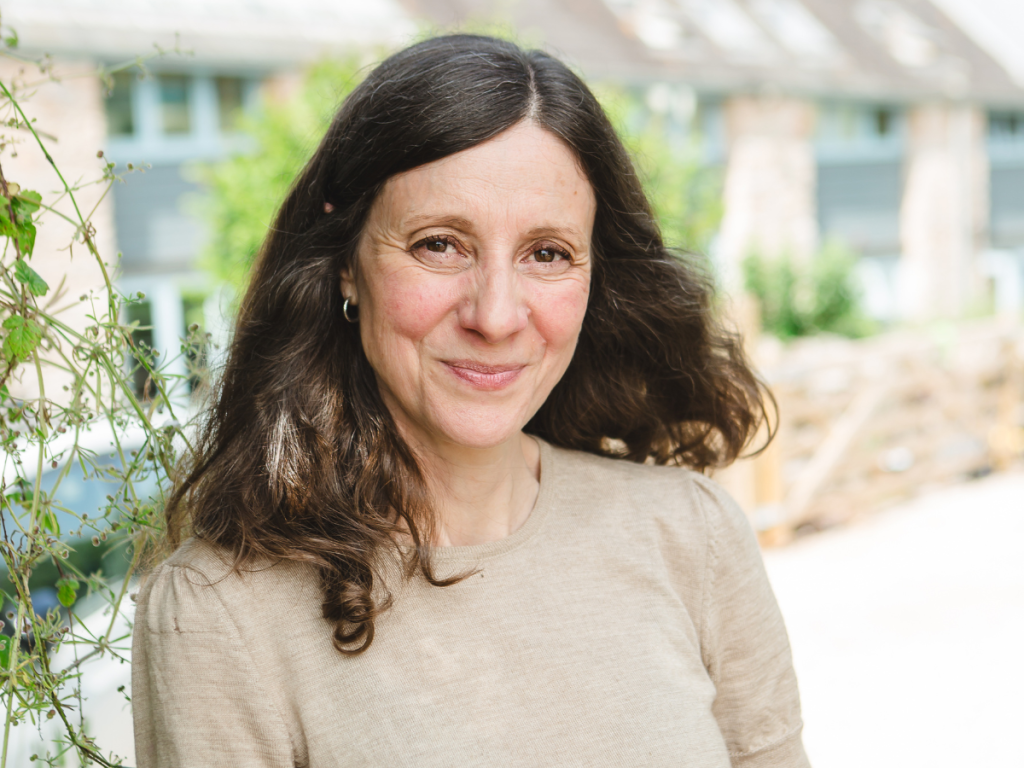
When I chatted with Jemarc Axinto on a cold day in early December, they were quick to call out my own sense of Soul Sickness (in this podcast episode’s title). With compassion and humor, Kuyate Jemarc—trauma expert, wellness consultant, spiritual guide, and nonbinary Filipinx neurodivergent healing artist—addresses burnout and how we can begin an inquiry into recovery.
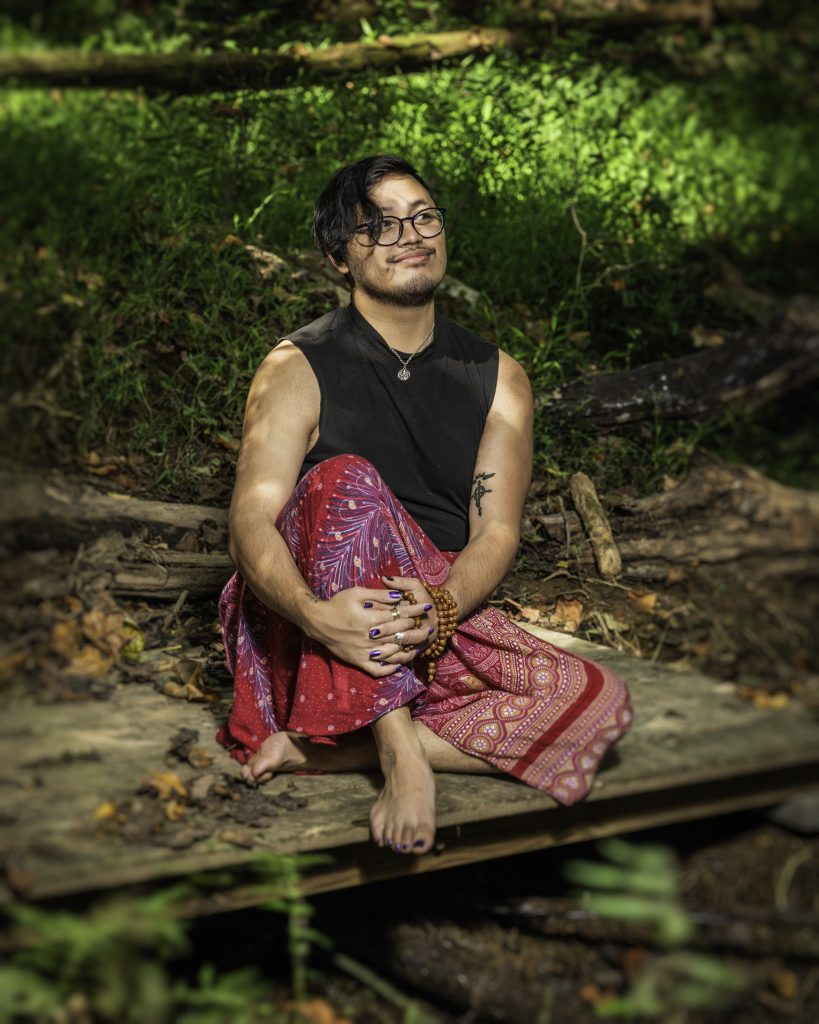
Dance, Song, Story & Stillness: A Conversation with Jemarc Axinto on Soul Sickness, Burnout, and Creative Healing
“I wish more people were doing what you’re doing for yourself right now,” Jemarc told me as we said our goodbyes after the podcast recording. “Because it’s so needed.”
They were referring to my resolve to rebuild a minimalist website, close my podcast perhaps indefinitely, and leave social media for seven years.
Welcome to the final episode (for now) of the Equitable Wellness podcast. Concluding Season 1, I’m honored to share insights from trauma recovery coach, wellness consultant, and spiritual guide Jemarc Axinto. If you wonder how to live, heal, and create in a world that often asks us to do anything other than just be ourselves, this one goes out to you.
Table of Contents
The Four Questions
Here are the questions we reference from Jemarc’s original blog post, “Burnout is Soul Sickness.”
- When was the last time you danced…Without judgment?
- When was the last time you sang…Without an audience?
- When was the last time you told a story…Without an agenda?
- When was the last time you sat alone in stillness…Without a goal?
Bibliography
Axinto, J. (2024, April 15). Burnout is Soul Sickness. Spiritual Geek’s Toolkit. https://www.jemarcaxinto.com/spiritual-geeks-toolkit/ltog8kh3ulahrq1pgvuaisw5wr7im3
Listen to this Equitable Wellness podcast episode with Jemarc Axinto
Jemarc is “soul excited” to have you listen in.
Are you ‘soul’ hungry? Are you so in love with the process of creation itself? Of the ways in which you have decided to describe that? Nothing else can fulfill that for you. That’s the kind of hunger that we need.
Where else to listen
YouTube | Substack | Apple Podcasts | Spotify
Read the full transcript here
Shayna Grajo
00:04-01:07
Hello and welcome everyone to the concluding episode of the Equitable Wellness podcast right here. From my little living room in my home. To your eyes, your heart, your ears. Today, and extending outward to that of Jemarc. The episode today will conclude indefinitely. The podcast for a season one end before an indefinite break, and I won’t be pressuring myself to take up the podcast again in the future.
So this is it for now, I’m your host, Shayna Grajo. And this podcast invites practitioners dedicated to liberation, work and equity to take the mic. We look at how practitioners, coaches, healing artists and businesses incorporate collective liberation into their practices. And today, I am joined by Jemarc.
I should know how to pronounce your last name, but I don’t.
Jemarc Axinto
01:08-01:08
Axinto.
Shayna Grajo
01:09-02:09
Axinto. Yeah, thank you. Jemarc Axinto, a professional trauma recovery coach, wellness consultant, spiritual guide and public speaker who has spoken at Harvard. As well as multiple medical schools, they have also trained mental health professionals across the spectrum in trauma, trauma healing, mindfulness and more.
Today’s conversation will touch on what, for lack of better words, I will call sacred creativity. And we’ll touch also specifically on a blog post that I will link to that. Jemarc published in 2024, titled Burnout is Soul Sickness. So I am excited to get into today’s topic and incredibly honored to have here with me. And welcome to the podcast, my latest and last invite, Thank you and welcome Jemarc.
Tell everyone where you are calling in from today.
Jemarc Axinto
02:09-02:49
I’m so excited that I’m here for the last one. Because we could, we could create our own canon here. Where, like that last episode with Jemarc was so awful, we had to cancel the show completely. No, hello, hello, yeah, hi, I’m Kuyate Jemarc.
I’m tuning in from Philadelphia, Pa. Here until at least next March or April, when my spouse figures out where their place for residency program. And then going wherever from there. You know, I grew up in a military family and I was like, when I get older, I’m going to be able to decide where I want to live.
And then I married a med student and I was like, Nope.
Not a thing.
Shayna Grajo
02:52-05:10
Yeah.
I get it, I had a military upbringing as well in my earlier formative years, so I remember the moving dance. And yeah, I’ve been living where I’ve been for the last three years now in the south of Spain, today, in the city of La Línea de la Concepción. Right to the north of the rock of Gibraltar, in the south, right on the Mediterranean.
Yeah, my home for the last three years.
So yeah, well, let me tell, let’s let’s see following along my notes.
You can read I published recently on my Substack about a transition I’m making into what I’m calling the minimalist era. I’ve been reading Digital Minimalism. I’m starting Cal Newport’s next book on Deep Work. And something really draws me to that spirit of withdrawing the senses, to focus and to concentrate. But also I’ve been feeling all the feels about algorithms, social media, all of those impacts on mental health and creativity, and whatnot.
But yes, I’m kind of going through a bit of a radical and rapid embracing of digital minimalism, or a version of it. I’ll be rebuilding my website into a minimalist site. And stopping this podcast for now and concluding it. And just kind of changing things up, shaking things up to hopefully orient myself and open myself to this topic today of creativity and embracing that as medicine.
However, people on this who are listening or watching along on Substack and YouTube still can subscribe to Equitable Wellness on Substack. The name of the Substack might change in the future or soon, but people are always welcome to subscribe and support the work, support the community. The full episode transcript and notes will be available on my website blog shayneagraffo.com, and I will link to everything in the notes. And that’s that. Okay, let me introduce now formally Jemarc, because I’m so sorry that I mispronounced your name earlier.
Jemarc Axinto
05:10-05:21
Oh my God, no. I asked both my parents once how they said my name, and they both said something different. So genuinely, you are at least closer than some other people in the world have done. It’s fine. You didn’t randomly make me French, so it’s all good.
Shayna Grajo
05:21-07:13
So okay, Jemarc, however your parents do, I hopefully honor their choice in how you call yourself, but Jemarc is. Well, they use they, she and he pronouns a Filipinx, non-binary professional trauma educator, coach and wellness consultant with a deep practice rooted in Buddhism and a philosophy. Um, oh, and a profoundly theosophic view of spirituality and wellness as a trauma educator. They’ve spoken at Harvard, as I’ve mentioned before, as well as multiple medical schools, and have trained mental health professionals across the spectrum.
With a decade of experience in trauma healing, they dedicate themselves to supporting others in healing and rewiring trauma. At the intersection of science and spirituality, their approach to trauma healing is an alchemical process, merging ancient Tantric Vajrayana Buddhism, limbic system retraining, neurolinguistic programming, meditation, mantra and breath work.
Jemarc shares these styles and techniques with a loving heart and an unabashedly geeky perspective. Aiming to show that you can be both spiritual and authentically yourself through techniques and practices that will serve in multiple ways throughout your life. Hmm, yeah, all right, so let’s get into it. Uh, that’s the intro, that’s the bio. Those are the credentials.
Jemarc Axinto
07:13-07:15
Love, here for it. Full vibes. Yeah, yeah, um.
Shayna Grajo
07:15-07:32
And then that conference that you spoke at at Harvard, one of them, I know that you’ve spoken at other such events. But um, the one that I had checked into last year, I think, was like, spirituality, and was it the?
Jemarc Axinto
07:32-08:03
Creative art, yeah, something like this, yeah, like creativity and healing spirituality, yeah, it’s. It was through Harvard Divinity School. So that’s the second time I’ve spoken through them, and then I’m kind of at a crossroads because they’re. It’s the conference coming back in September and I know they’d like for me to come speak again. But it’s also just like, Okay, the Divinity School is its own thing. But it’s still under Harvard, which has been kowtowing a lot.
Shayna Grajo
08:10-11:00
Nice, I love how we’re all kind of variously aligning, finding these values and and and then going with that flow. Um, so good luck with that. But yes, this just is showing to the audience that you are brilliant. And you are an expert on the topics of creativity, artistic expression, healing. Um, spirituality, all the convergence of these fine forces for good.
So I’m going to read a bit from this blog post that I found on your website, uh, and resonated with quite a bit. There are, um, one of the blog posts is How to recognize, or something like, when you call it burnout, you’re already burned out. I don’t remember the whole title, but this other blog post that I’m referring to is the Um, burnout is soul thickness. So, um, here’s just a little excerpt, um of your words that again I will link to, and um, give the citation for. So you wrote, Um, that the questions the Shaman have historically asked are so important.
But I also think it is important to modernize each one by adding a second half to each question, of which there are four questions. So these historic shaman have asked one, When was the last time you danced? and you add without judgment? So two, When was the last time you sang?
And you add, without an audience.
Three. When was the last time you told a story without an agenda? or when was the last time you sat alone in stillness, without a goal?
Um, and then you wrote a lot of other wonderful things that I will read here to comment on that. So much wellness and well-being in the world today is sold as a tool for further productivity, instead of a resource to fall in love with yourself and the world. All over again. Burnout will continue happening across the board until healing and wellness is reframed. Your soul sickness will never be alleviated so long as you don’t have something precious and just for yourself.
Oh so salient. Ask yourself, what would my life look like if I unconditionally enjoyed it? What if you could dance without feeling like you had to look good, what if you could create art without worrying about how to market it? And finally, what if you could transform your relationship with yourself and the world at large so that you can thrive and no longer feel?
Jemarc Axinto
11:00-11:06
Burned out? Oh my goodness, I wrote that April of last year.
Shayna Grajo
11:06-11:09
Yeah, you did April 15th of 2024.
Jemarc Axinto
11:10-11:12
That’s crazy.
Shayna Grajo
11:12-11:17
Well, yeah, last year is almost last-last year.
Jemarc Axinto
11:17-11:23
2025 was 20 years in a year, especially if you’re on American soil, so yeah, that’s valid.
Shayna Grajo
11:26-12:04
Yeah, no, it’s been, it’s been a good one, it’s been a long one. Um, yeah, but today we are recording the 2nd of December in said 2025 for not much longer, um, just one last final month before we’re having our New Year’s party or channeling the 2026 vibes. Um, so, given this kind of introduction, we have these four questions, uh, presented by What was it African Shaman?
Jemarc Axinto
12:04-12:34
Somebody talk about it at some point and it just said, like, Indigenous Shamans, and I was like, Indigenous just means indigenous to that country. So I like, dug a little deeper. And and from what I can tell, and if anybody finds anything contradicting, like, obviously, I’m not going to be offended. If you’re like, it’s actually this, um, but from what I can tell, it’s from some specific African shamanism. But I’ll also say, Africa is a big ass continent, so I don’t even know regionally, let alone what country of origin.
Shayna Grajo
12:37-14:04
Okay, um, and the questions are again, when was the last time you danced? When was the last time you sang? When was the last time you told a story? And when was the last time you sat alone in stillness? To which you added I think that wonderful extra, you know, bit run without the judgment, without an audience, without an agenda or without a goal.
Um, so yeah, we’re gonna, I guess, get now to some questions to follow up on this. Um, and I think that we’re all gonna kind of come back around to. Not only your insights on trauma and neuroscience and all that geekiness, as well as the spirituality and Buddhism and practices, right? Um, but then, right, you? We also share kind of our little titles of entrepreneur or small business person and owner. And of course, I have the questions about, you know, the marketing piece and how to create without worrying about its marketability or commercialization, and all of that.
So let’s just start with some questions. Soul sickness, you write, is something that keeps us trapped in the mind and disconnected from the fullness of life. How do you recognize soul sickness in yourself or in the people that you support?
Jemarc Axinto
14:04-14:23
It’s a feeling of urgency, it’s this feeling of just kind of like, you’re with somebody, but you’re not really. Like, okay, we’re talking about somebody else. First of all, like, you’re with somebody, but you’re not really with them. And could I say something like, lovingly edgy?
Shayna Grajo
14:23-14:23
Yeah.
Jemarc Axinto
14:26-16:39
I can feel that you’re having a bit of soul sickness right now, like there’s an unsettledness here. Um, it’s not psychic, right? Like I often say stuff like that, and people are like, and I’m like, No, no, no, don’t, don’t attribute shit, that isn’t here. We’re humans that innately respond unconsciously with each other, our nervous systems respond to each other’s nervous systems, even across the interwebs.
Like, we don’t need to like the only reason why. I’m more sensitive than say somebody else, or like a neurotypical person on a street like ones. I’m neurodivergent, so I’m naturally going to be more sensitive to that. But two is because I’m more present in my body. So, like, typically, people are in a perpetual state of dissociation in the world that we live in, and it’s because capitalism thrives on that.
It wants you to keep buying the next shiny thing, it wants you to keep producing constantly, to make money for rich people. And the only way to keep you in that state is to keep you burnt out. It’s to constantly move the goal post over and over and over and over and over again. And so when I think of soul sickness, it’s just like, Wow, you are deeply uncomfortable. And it’s not like, in this immediate present moment. Because, of course, again, I’m on American soil.
So, like, there’s a perpetual state of existential crisis happening right now for me, in a trans body and a brown body and a neurodivergent body in America. But, like, in the immediate present moment. I’m sitting here, I’m sitting here in my home, talking to my cute friends in Espana. Like, you know, we’re having a good time, I’m good, everything’s fine.
My brain isn’t like, Oh, I have to do this, I have to do that, I have to do this, I have to do that. Oh, I can’t do this. Like, there’s no perpetuated narrative of anxiety and urgency in my brain. So I know that I’m good, I know that I have the the permission that I can give myself to just put everything down. Like, I didn’t do shit yesterday, beyond some light chores. I didn’t do anything related to my job because I was like, I can’t, like, I just wasn’t in a state for it.
I was overstimulated as it comes with being neurodivergent, and I was like, Okay, cool. I’m gonna go to bed early tonight and I’m not gonna talk to anybody. And I’m just gonna fucking unplug from everything and do what I gotta do. It doesn’t become quote-unquote soul sickness until it’s like a perpetuated chronic state. So if I was like, feeling the way I was yesterday and in my old paradigm of functioning.
And I was still going and going and going and going and going and going. And I was very irritable and I was very impatient with myself and with others. And if I was snapping at my spouse? And if I was just like pure chaotic, almost like hypomanic energy, and then oscillating between that and shutting the fuck down? Yeah, my soul’s not happy, it’s sick, it needs tender, loving care.
Shayna Grajo
17:08-18:50
TLC tender, loving care. That is what you’re talking about today, and I’m happy that you’re going to be sharing this care and aspects of it, ideas of it. And yes, I think you have correctly identified soul sickness, or like a sense of jitteriness in me. It’s like, cold, fucking cold in my apartment, there’s no central heat in here.
I am very like, hopeless. I don’t have my little space heater on because it’s very loud and I want to be able to hear everything. And yes, like I had thought, in my desire to take care of my own soul. As noted, of closing the podcast, stopping the recordings and whatnot, there’s still like this push proverbially to kind of finish, get done with the recording, wrap everything up and then like the transition or whatnot.
So I had to be here for it today. But yeah, like always, always, the degree of rest, wellness, spaciousness, joy, the relaxation could always be more in this sitting here, body and soul. All right. Let’s look at now these four shamanic questions dance, song, storytelling, stillness as these portals. Which of these practices have been the most essential?
I guess even if they’re metaphorical for your own healing, and how do they show up in in your life today?
Jemarc Axinto
18:50-21:23
So dance was really my kind of reintroduction to the Divine in my life. I was raised Catholic, so naturally I became an atheist for a very long time. As is what to do when you grow up in like an Abrahamic faith.
And dance was kind of my way to feel connected to something greater than myself. So I was a hip-hop dancer and I was a choreographer, and I did like musical choreography, and I also did ballroom choreography and urban choreography, and that was really, really wonderful. And actually, there are a lot of reasons to why I stopped, one of it being I was in a very abusive relationship. But the other component of it was just that it became very. When I say commercialized, I don’t mean when people are like, Oh, it’s so.
I just meant that so many of the classes that I attended and that I put together and I loved. It used to be just about like, Oh, we’re all here to improve ourselves, and we’re all here to just do this thing that we love. And then became very. Everyone was just showing up like they’re ready to be working in the industry.
And it became very just toxic in this way of doing it, not for the sake of what mattered most. And so I’ve really been in an era of just reclaiming, dancing for myself and just dancing about in my basement. Much in the way that I would do it in my bedroom when I was in high school, and that’s been very lovely. Singing every time I’m in a car by myself, specifically, I’ll just be singing, or when I’m just at home alone and doing tours, I’ll just be singing. Whether it be Broadway soundtracks or emo music, or really whatever crosses my brain, folk songs.
Telling a story is really part and parcel to my life, you know? I mean, so many of the spiritual teachers that founded all of the major religions of today were essentially storytellers, and even Indigenous Shamans were storytellers, and our elders were storytellers. And so for me, my life is just a perpetual state of telling my story in a variety of different ways, in a variety of different forms. Because, like, even when, you know. On my Substack, where I talk about wellness and healing through the lens of pop culture, I have to integrate part of my story into that.
Like, I can’t just have an objective voice. I mean, I can make that decision, but it doesn’t feel right for me. Because then it feels like I’m talking down to people, as opposed to I’m talking about my experience. Is this something that you share? is this something that we understand, is universal to all of us?
By me, embedding my experience into that and then sitting alone in stillness, without a goal, is every goddamn day of my life. Like, I’m literally about to meditate, right? After we’re off this call, so yeah.
Shayna Grajo
21:23-23:41
I’ll join you on the meditation. Absolutely, yeah. I’ve got my my yoga mat unrolled, my little cushion just sitting right on top of it. Look, park my little booty down and and sit, Um, oh, I gotta plug in the computer. Let me just have this lamp here lights off. Yeah, so we haven’t even.
There’s so much more conversation, I hope, ahead of us. But even if we’re recording this last podcast, we haven’t even, like, touched any of the crest of the top of the peak of the iceberg. On spiritual practice, Vajrayana, Buddhism, Tantra, like these are things that I’m also madly in love with, you know? Um, like, I was actually saying to a good friend of mine who’s also a very, um, scholastic kind of soul in academia, um, but also deeply spiritual, um. I shared with her yesterday.
But what I love about Buddhism is like, there’s something for everybody. You kind of get your bare bones Four Noble Truths. But then you do also have the Zen in the middle, and then the other side of the spectrum of like, No. I just want the visualizations and the Tantra, and like the magic, and, you know, telescoping Buddha heads, right, like there’s something for everybody. Um, so, but that aside, next question, let’s see, um, can this be linked?
Okay, let’s talk about your spiritual roots. Um, when you talk about creation as a path to healing, um, it feels ancient and deeply current. So how have Buddhism, theosophy, or spiritual frameworks shaped your understanding of creative expression?
Jemarc Axinto
23:41-26:21
So, as I’ve heard, it said, which is again… One of my favorite things about Buddhism is if you read the original sutras, which are allegedly the teachings of the historical Buddha, Shakyamuni Buddha, or the Shastras, which are like the commentaries on those teachings. Um, they open with, “as I’ve heard it said,” which I love because it introduces this layer of subjectivity to it. And it’s just like, Listen, this is how I received the information, this is how I interpreted it. And so, in Buddhism, one of the biggest things is that there is no difference between what the mind perceives and the mind itself. And when you really embody this understanding that objectivity only exists insofar as collective agreement on objective reality, you then realize that, like, oh, everything’s subjective.
We’re in constant state of creation, meaning making perpetually. It’s just a question of whether or not you’re allowing that to control you, or you are in some way, level layer, detached from that enough to understand that you can create your own meaning. And the way that I like to relate it to people is through a little bit of neuroscience. That experientially, you know, excitement and anxiety release the same neurochemicals in the brain. They’ll release adrenaline and there’ll be a little bit of cortisol, because that’s like a safety, safety measure.
And so when I think about like, why is creation the the the ultimate form of healing? I mean, that’s a little bit of a my clever way of being like, Oh, yeah, you’re healing in creation? it’s like, No, you’re actually just being in creation. But the funny thing about Buddhism is that it’s so difficult because it’s so simple. We as humans love to make shit deeply complicated, and so sometimes I over complicate the concept a little bit.
So that’s somehow because it’s suddenly more challenging, because it’s suddenly more more than what it is, suddenly. It’s something that people can quote, unquote, “work towards.” Um, as I’ve heard it said. One of the teachings is that the Buddha said, Think of the teachings as a raft to take you across the ocean Samsara, but eventually you have to leave the raft, step onto the shore. And so a lot of people tend to get caught up in the methods or the practice, or the analyses, as opposed to the core of it.
Which is, how is my relationship with my mind, which is innately in a state of perpetual creation, and how do I cultivate the ability to just observe that existence? I hope that makes sense. Also, if it wasn’t clear, I’m neurodivergent as fuck. Really, forgot everything I said, so I hope it was good.
Shayna Grajo
26:21-28:13
Oh, no, no, it completely makes sense.
And it’s very lovely how I really just love that you are a storyteller. You paint the picture of the Shakyamuni and all of the, you know, the Shastras, or the Shastras or whatever. Like the comment, like, I love how, yeah, you can, kind of these kind of lessons that Buddhism brings out, I think. You paint that compelling picture and then weave that into, Okay. And this is what neuroscience teaches about adrenaline and excitement and anxiety. Um, so that when this kind of more detached observation on the nature of reality is viewed, um, there’s more of that context.
I think, um, yeah, like, okay, people are empowered to create, um, through mind and through a relationship with mind to whatever. Bring the raft over to the other shore. Um, now I love it, I love it. You like the whole picture? Um, that’s great. Thank you for putting that into context.
Um, my questions are still pretty general and all over the place. So yeah, let’s get into capitalism.
Creativity becomes distorted under capitalism and the pressure to constantly produce. What does decommodified creativity look like to you, and how can people begin to reclaim it?
Jemarc Axinto
28:14-33:21
Oh, okay, so this is a really good example that you haven’t got as deep dive as I expected, which is good. Because I’d be. I would be blown away if you found that video. So somewhere on my Instagram like and my TikTok, maybe like, maybe a few years back, I did this video that was really just for me, um, where I was just like, You don’t have to monetize every single hobby, and I just kept repeating it. You don’t have to monetize every single hobby, you don’t have to monetize every single hobby.
But again, because capitalism is innately about inequitable wealth distribution, it’s about making people who aren’t the one percent produce, produce, produce, produce, produce, produce. It’s why you see people all over social media who are like, get these six side hustles. So you have multiple forms of income and you can live the life you want. I’m like, I don’t fucking dream of labor, bitch.
I don’t dream of labor. What are we talking about? And so, like any single time I’ve done something I was really, really passionate about. What made me burn out from it was the seeking some kind of transactional outcome in which I would benefit. It wasn’t just like, oh, I benefit from just the act of creation itself.
And when I had my podcast, uh, that was like a creative storytelling podcast for like, three years. I was doing everything for it and I wasn’t getting financial income, but I was getting social income. And the attention was like, I was so starved for the kind of attention I needed to give myself, and so I burned myself out doing that same thing when I had a YouTube channel. Um, the business I have now is the first time I’ve ever, and I’ve been an entrepreneur since I was like 14. Um, and I’m 33 now. And the business I have now is the first time I’ve ever done something that was so detached.
And just like I’m doing it because I want to help support others and care for others, it doesn’t mean I don’t care about. Like, having my needs met is why I have another job, that’s a day job, um. But that also gives me the freedom to make sure that I’m not attributing my financial insecurity or desperation or any of that to the people I’m working with. And I’m really able to show up for them. And again, there’s this thing and and it’s such a Americanized thing, and you see it in all of our media of like.
They came from nothing, and then they rose above it and they completely changed their lives. And that’s what people are missing today. They have too much, they’re not hungry enough, they’re not hungry enough because they haven’t actually had to experience what it’s like to be hungry. And it’s like, no, you can be successful and thrive and not have to be the quote-unquote starving artist. I mean, one of my favorite artists is Yungblud.
Yungblud grew up in a much more well-to-do family. Like he was, uh, he was not working class, he was middle class, and he’s an incredible musical artist. So, like, the question isn’t Are you hungry? starving? Because when your nervous system’s dysregulated, it’s going to be hard to create? Or is it, Are you ‘soul’ hungry?
Are you so in love with the process of creation itself, of the ways in which you’ve decided to describe that? Nothing else can fulfill that for you. That’s the kind of hunger that we need, and capitalism innately shits on it because everything’s algorithms. Now it’s like, oh, you do one thing, and then that’s the thing that people know you for. If you do anything else, you’re not going to be rewarded by the algorithm for doing that thing.
So you have to be stuck in this little rut, in this little bubble. And then so many people are like, Oh, why do they keep producing the same shit over and over and over and over again? Because you’re, you’re shooting for the bare minimum? Like, I just watched this movie yesterday with my spouse, it was called Daddio, Um, and it was starring. It was only two actors in this entire movie, and it was starring Dakota Johnson and Sean Penn, just two actors.
And the entire movie takes place in a taxi cab from the airport to midtown New York City. And it was so fucking good, literally there. It’s just a two-person, one-act play that took a course over the course of, like, nearly two hours, and I loved it.
And I was like, Oh, this wouldn’t do numbers in the theater. Because, again, people are so perpetually dysregulated, they’re looking for stuff to numb them. And art, innately, is supposed to evoke some kind of emotional response from whether that be discomfort or not. Um, I forgot who said it, it might have been Oscar Wilde, but it was like, Art is supposed to make… it’s supposed to discomfort the comfortable and comfort the discomforted. And when you have, like big-ass blockbusters like the Avatar movies that are just not telling anything really deep and are just there for the spectacle, which spectacle has its time and place?
But when you make that the the mainstream, then nobody knows how to actually make, just to make. Like, Do you know the artist Dochi? I fucking love Dochi, but like, Uh, Dochi is a rap artist. And um, you know, she had a couple hits on TikTok because they’re like, trendy. And then she’s like, I’m just gonna start making the kind of shit that I want to make.
And it’s like, Yeah, because you, you were already lost, and you said, this is the identity that I need to be to be successful. And then you’re still in pain, and then you’re still suffering. And then you do horrible things to try to fill that void, and you do even more horrible things to try to fill that void, and nothing is filling that void. When all you had to do at the end of the day was just like, fucking love yourself and you can love yourself deeply and make some really dope fucking art. Like, Uh, there’s a comedian, Pete Holmes, who I adore, he does very quote-unquote, “clean comedy.”
Um, sometimes he curses and stuff like that, but he’s, he’s very much. Like, as far as I know, and I could be wrong, from my understanding, doesn’t have any scandal, at least big enough for it to cross my radar. And he’s like, Yeah, no, comedians are so depressed. I’m like, fucking, why you don’t have to be depressed and upset to like, do this? We’re we’re making people laugh. Let’s lean into that.
And so, yeah, I don’t know, I think you’re just helping me realize that part of why I do. What I do is to show people that we don’t have to make ourselves miserable to make good art, good things.
Shayna Grajo
35:31-36:42
Yeah, no, I mean, I love, actually. I do really love this conversation because I think it does touch on the core of so many vital, I don’t know pathways, right, like trauma and art. And I mean, you did post on your Substack once, um, in one of your notes about how all of art is political. And there’s also the case of just being political is also just being, yes, just being allowed to have whatever you know, being allowed to be, being allowed to survive as we are as the special, wonderful and unique people that we are, right? Um, so it’s like a political thing to be, to be healed and healing. um, oh, a political and spiritual and artistic, you know?
But bringing it then into, like, Oh yeah, business survival, um, the whole right, the capitalism wrapping of, Yeah, I I think you’ve given a lot already. For for all of us to take away and to contemplate, and to kind of nibble on in our, in our walks and our reflections.
Jemarc Axinto
36:42-37:18
Um, can I also add to that? Like, yeah, healing is political.
Because when you’re nerd, because fascism innately needs you to be dysregulated, because that’s how it can propagandize you. Like, people are like, why does Trump want people to be poor and want people not to eat? It’s like, because it’ll make them angry, and then he can say, Oh, who you’re angry at are immigrants, who you’re angry at are trans people.
Who you’re angry at are disabled people, who are angry at are anyone but the white man who is in a position of power who’s making all this happen. And when you start healing, you start seeing with clarity, so yeah, healing is innately political.
Shayna Grajo
37:18-37:31
I love it, healing art, all of these good things. Um, so let’s see my question, the Pikachu pillow…
Jemarc Axinto
37:31-37:38
In case it wasn’t clear that I’m actually five, Uh, yeah.
Shayna Grajo
37:41-37:50
Yeah, actually, comforted and warm, that’s good. Um, yeah, and rocking the the Buddha tattoo there as.
Jemarc Axinto
37:50-37:52
Well, um, thank you, it’s new.
Shayna Grajo
37:52-37:53
How new is it?
Jemarc Axinto
37:53-38:06
Uh, I got the first half done, uh, end of October, uh, because it was my birthday. And then I finished it a couple weeks ago and now I have to get it because it did get infected.
Shayna Grajo
38:06-38:21
But yeah, nice, yeah, actually, I’m remembering because of the October birthday, is it? When is your birthday? again? I remember October.
Jemarc Axinto
38:21-38:22
19, 19th.
Shayna Grajo
38:22-38:30
Oh, yeah, we got into your Matrix of Destiny, so I remembered that you were a 10, but I couldn’t remember anything.
Jemarc Axinto
38:30-38:30
All good.
Shayna Grajo
38:30-39:32
Yeah, um, such a good archetype to be able to, you know, be a foil for me because I have very little of that in my in my chart. The 10 energy, Um, but yeah, you know, my partner’s a 10 and he’ll tell me things.
And I and I’m like, I don’t get this, I don’t understand this, but okay, you, you do you. I don’t know how that functions, I can’t, I don’t know how that operates, but I hope it’s helpful. Um, but it’s good for us all to get along. Um, yeah, all right.
So let’s see back to the list of questions. Um, you wrote that, even as you created the blog post that you wrote in 2024 about Burnout is Soul Sickness. You had to remind yourself, I am doing this for the sake of sharing. Um, yes, how do you personally? And I think you’ve addressed this in different ways?
Jemarc Axinto
39:32-40:21
One of my babies, you want to come up here? Yeah, here I make room. I make room for you. okay, up Yoda, Oh Yoda.
Come here, Princess, you have room, you can get up. I believe in you. You’re thinking about it. Activate your PDA. I’m sorry, Okay, go ahead. Yeah, um, I’m like, Where is this little note here? Um, oh, my PV came on to people doing something for the sake of sharing.
Shayna Grajo
40:21-40:44
Um, when you are creating and then offering as just part of creation, or you have way better words for it that are very beautiful.
Um, but let’s just say, creating as offering versus creating as part of your business. How do you, um, kind of parse that out?
Jemarc Axinto
40:44-41:46
So this is going to be very unpopular to the business coaches out there I, I literally have let go of thinking about, I had to, I had to because I was starting. You know, I’ve been doing it for almost five years now and the first two years especially. Was such a like. My old paradigm of like, Oh, this is gonna, this is the thing I need to do this, I need to take these steps.
I don’t have business coaches. I was just like, man, I get. The advice they’re giving me might be good for someone who who’s maybe neurotypical, but I feel just miserable by this advice. Like, some of it was just like, and you know, I have a master’s degree in entrepreneurship, so, like, I already know some of it. To, like, tell people what they want, but give them what they need.
And I was like, that just feels manipulative. I don’t want to do that. So I just had to be so like, what’s fun for me? How do I make sure I enjoy this? You know, because I’m gonna die one day, like we’re all gonna die one day, I could die tomorrow.
Do I really want to die tomorrow? And then felt like today I was just miserable. Thinking about, oh, what can crack this algorithm and what can do this thing, and what can get me? I was like, Oh, fuck that, that’s so gross and I just I. I don’t want to have regret, you know?
And I’m not saying I haven’t made mistakes in my life, I’m not even saying I haven’t done things that I wish I could take back. When I, when I speak of regret, what I’m talking about is, do I feel like my life was well lived? And if I kept living my life the way I was doing it? Prior to my trauma healing, where I was so desperate to be seen and accepted and get the kind of emotional attention that while I love my parents, I didn’t get from them because Filipino parents don’t know about mental health, it just is what it is.
Uh, I, I wouldn’t. I would literally not be alive right now, like I was at numerous points in my life actively not wanting to be alive. So yeah, I hope I answered your question.
Shayna Grajo
41:46-43:17
So I think, you know, a lot of this is again, very, um, inspiring for me. Because, as you know, as I embark on this like transition myself to kind of say, I don’t give a fuck anymore. I need to just be myself, I need to not care about whatever, whatever. Um, I can kind of see this divide because in talking about singing and dancing, there is actually embracing that, right, singing and dancing. But then there’s also like, Okay, well, the algorithms today on Substack are you have to get on there and sing and dance, right?
Jemarc Axinto
43:17-43:21
Oh my God, is that the algorithm right now? Fuck that.
Shayna Grajo
43:21-43:23
It’s going, it’s going the direction of, like….
Jemarc Axinto
43:23-43:24
Okay? TikTok, Substack
Shayna Grajo
43:24-43:25
Video…
Jemarc Axinto
43:25-43:25
Oh my god.
Shayna Grajo
43:25-43:37
Yeah, video influencers, you know, like brands moving over. Brand partners. I haven’t read the latest stuff, but it all seems to be pointing to. It’s not a quiet space anymore to be contemplative.
It’s like, space to be social media.
Jemarc Axinto
43:37-43:46
Gross.
Yeah, I knew there was a reason why I was like, I don’t feel like posting anymore and now I know why.
Shayna Grajo
43:46-44:06
Yeah, and so I think a lot of us, you know, to speak for myself as a sensitive, or, you know, person, a sensitive soul. Looking ahead at that fork in the road of like, Well, how do I want to handle this kind of transition? Because I had all these like high hopes?
Jemarc Axinto
44:06-44:06
Same.
Shayna Grajo
44:06-44:41
For, you know, romanticizing about this platform. Because it seems to be oligarchy free, and it seems to be a place where people don’t have to sing and dance.
But now that it will turn into that, do I want to embrace all the strategies and sing and dance, or do I want to actually sing and dance, right? And then maybe just take that show somewhere else, or maybe just let that be? I don’t know. You are, I think, a great example, too, of like you… I don’t want to say you’re performative, but you do, on your Instagram, right?
Jemarc Axinto
44:41-45:11 Notches up. When I post on videos like, I mean, No, I’m still a very chaotic person, as my friends will say, when we hang out in person. It’s just, you know, it’s not when I’m sitting, I’m not sitting at home, like, I’m sitting at a home. Like, so, yeah, I think it’s just when I know there are people perceiving me, my ADHD gets excited, and then that’s what happens when the camera comes on.
Or when I’m around other human beings.
Shayna Grajo
45:11-46:15
Um, yeah, well, that’s. It’s beautiful to see, right? Like that neuro spiciness, the camera loves it. Okay, um, let me, but yeah, where am I going with all this, right? Like, for those of us who want to follow some sort of a, you know, getting beyond burnout.
Um, let me just get to the next question, right? How can practitioners, creatives and small business owners begin reframing wellness as a source for joy, not for output? Um, how, how, how, how? Um, yeah, and I know that, like. You’ve also taught workshops on Revive and Thrive, um, as well as master classes on burnout. And you have a lot of resources, you have a blog and you have, um.
You’re available for consulting, and you’re available for all sorts of coaching, um, in different settings, one-on-one or in groups.
Jemarc Axinto
46:15-46:15
Yes.
Shayna Grajo
46:15-46:30
Corporate, all of it, right? Um, so I know that people you know can get those resources. But if you wanted to share something today, free on the air, what, what is something we can leave here for starting on that questioning?
Jemarc Axinto
46:30-54:45
Well, I think the first thing… And I opened my Revive and Thrive class with, like, a really radical truth. And so for those of you who are listening, who are like, I think I’m burnt out, or I’ve been experiencing burnout, or I’m so burnt out. The radical truth is this: You have been burnt out for much longer than you realize.
And that burnout has become habituated into your nervous system, into your neural pathways of your brain. Because what’s happening is: There are five phases of burnout. There’s the honeymoon phase, the onset of stress phase, chronic stress phase, burnout phase, and then habitual burnout phase. Most people are in a state of habitual burnout. Were they able to claw their way back? And I said it in that same blog, they’re able to claw their way back? To like, Oh, I’m excited again, and then immediately fizzle out right after.
So the first thing that people need to realize is just be like, how how am I when I sit, when I have a break from work? Like if I have a regular day job, whatever that form that may take, whether it be retail or a nine-to-five corporate job, whatever it is. When I go on vacation, am I genuinely able to just be on vacation? Or is my brain still thinking of, like, oh, I can produce, I can produce this, I could produce that, there’s one layer of it.
Is it like, Oh, I feel bad that I’m not producing? There’s another layer of it? Oh, I feel so unsettled, like there are no thoughts in my head, but my body feels restless and uncomfortable. Those are all indicators of burnout, those are all indicators of somebody who has been molded by an environment and culture that bases worthiness off of productivity and doesn’t know how to model meaningful rest. Most people don’t know what meaningful rest looks like, because we’re from productive cultures. In a productive culture, worthiness is based off of what you create and how you contribute to society. Your merit is defined by how useful you are, whereas restorative culture is just recognizing that, like, your worthiness, is innate.
You create because you want to, not because you’re pressured to. Your sense of self is defined by a knowing of that. So, if you want to get out of burnout, the first question you need to ask yourself is, How much bullshit have I taken in? To define who I am? How much of my self-worth is being defined by an algorithm?
How much of my self-worth is being defined by the amount of likes or follows, or money, or friends, or Tinder hookups, or whatever it is? What are the things that I’m valuing that are not actually valuable? So this is going to be wild and this is going to be crazy. Um, and I tell people, only do this. If you have, like a therapist you can talk to after, or, of course, like, if you are working with me, we’ll talk after it.
Um, and I usually discern if it’s an appropriate exercise, um, but one of the exercises we do in Buddhism is a death meditation. It’s great, uh, when you are going to bed. And again, I only recommend this if you have someone to integrate with, because I don’t want to anybody into psychosis, you know? So if you’re able to do this in a safe, nurturing, nourishing kind of way, and you have something to integrate with after. But when you’re going to bed, you start contemplating.
And there is an actual like official Buddhist practice to it. But I’m just going to modernize the language. Um, where you go? This is the last time I’ll ever open my eyes. I am not going to wake up in the morning and you convince your nervous system that’s true, I’m not going to wake up in the.
Do I want to live well? Who do I have well wishes for who and what am I grateful for? When you wake up the next morning fully convinced you weren’t going to wake up, holy shit.
It’s like getting a cancer diagnosis and getting over the the denial and and all the five stages of grief and jumping straight to acceptance. Like, I’m gonna fucking live my life if I now know that’s the thing, right? Like, as humans, we all know we’re going to die, but we all have this delusional idea that it’s going to happen when we’re a hundred. Oh, I can get it. We have planes that fly low over my house all the time.
It actually, like, makes me anxious, sometimes, like the house shakes, and I’m like, is this what’s going to take me the fuck out? I don’t know, but damn, does it help me choose what’s important? I can get hit by a bus tomorrow. I’m trans and brown and neurodivergent in America, I can get shanked by a mega person, you know what I mean like, so I’m going to choose what matters to me. And that also falls into like familial dynamics, you know, like there’s so many people who are in toxic dynamics with their, with their birth family.
Because they’re like, Oh, I’m obligated to them, right? And it’s just like, Okay, but if a meteor was crashing tomorrow, who’s the first thing you’re going to reach out to? It’s like, Oh, my friends, oh my partner, you never once said you’re immediate family. So why are you putting yourself in this position? Because you’re more afraid of the feelings of guilt than the fear of of what it would mean to actually live and enjoy your life.
Yeah, and again, you know, with the way things are going in the world right now, we could be dead tomorrow. Like, part of what really led me to, uh, jumping into doing my career full-time and leaving my corporate job with no backup plan. Um, and again, I don’t recommend this to people. I was fortunate I’ve been saving money again since I was 14, so I had all back money if needed to. Um, was I was turning 30, like this was when I was 29?
When I made this decision for myself and I was like, I’m turning 30, do I really want to turn 30 still doing the same bullshit I’ve been doing now? Yeah, I look at pictures of myself when I was in my early 20s, I look older then than I do now. Because the stress on your nervous system is shortens the telomeres in your body, and it ages you rapidly.
But being in a responsive state, and that’s the thing, too. People think regulation means you’re never angry, and people think being regulated means that you’re never upset. It’s like, No, I’m plenty upset, I’m plenty angry and I’ve had these moments. It just means I’m able to be with it without chronically being in that state, I’m able to feel into it and release it. Most people don’t know how to do that, most people are afraid of their difficult emotions.
That’s the thing, too, again, like people, when you, when you attribute your creative expression to some sort of income, where it be financial or social. What you’re saying is this is the thing that will make me good enough. That’s too much pressure, that’s, that’s way too much pressure. You’re never going to create what you want to create and what you are meant to create when you’re living that energy in that state of being.
And when you’re saying, I’m just going to fucking do it, to do it, oh, it’s perfect. Like, I’m literally going to make a video sometime this week, based on a conversation with my intern about how Mega Man …The animated movie Megamind needs a sequel, where they’re in a throuple with each other. Because Megamind is clearly a gay man who didn’t realize he was gay until he thought the superhero was dead. Um, he’s clearly the superhero is clearly their bisexual golden retriever boyfriend. And, uh, yeah, like, I’m just saying, like, you know, that’s a dumb video.
I don’t know if that’s going to get numbers, I don’t give a shit if it’s going to get numbers. It’s just something that I want to put out in the world because I’m actually a chaos gremlin in a human body. You know what I mean like?
When we live in a world where everything is so focused on on social or financial currency, that’s why we have people are so afraid of being whimsical. Who say that people acting a certain kind of way is cringe. Or people who say, like, when we were growing up, because I think we’re around the same age when we were growing up. Uh, there were people who would like bully you because you liked school.
Like the fuck, like you’re gonna let your insecurities impact me, like, Fuck, yeah. I love learning. Do I like the homework and exams? No, but I love learning, I love being in a state of learning. If I could be one of those people who I have some daddy paying for me to just go learn all day, fuck yeah I would do that. In a heartbeat. Cause we’re here to live. That’s it. Everything else is so… is such capitalistic bullshit. I’m not saying you don’t make sure your needs are met, but the key is moving the goal post.
I saw the statistic recently, which really fucked me up, that—I think it was like 40 percent? Maybe even a higher number than I think. But 40 percent of unhoused people in America have more than one job. That’s fucked up. So when you have a bunch of people who are so desperate to no longer live in poverty. And then you have corporations telling you that’s the path to success. And then you have young people who should be cultivating their sense of self-worth and their identity, and their creativity, and their love, but instead are filtering everything through this lens of capitalism…
That’s how creativity dies, that’s how people get burned out. That’s how we have high suicide rates amongst anyone who isn’t a who isn’t a wealthy, well-to-do person.
Shayna Grajo
54:45-54:45
Yeah, well, Jemarc…
Jemarc Axinto
54:45-55:05
I hope I answered your question! I feel like I just took you to church instead.
Shayna Grajo
55:05-56:58
No, I think one must go to church. I mean, to the church of the temple, right? The sacred hall of wherever people want to commune with the divine, right? Like, it’s necessary to go to church. So I’m glad you took us all there.
Um, because of the world we are in, like we’ve mentioned already, um, that you’ve mentioned about fascism, authoritarianism, dictatorship. I mean, systems crashing down, institutions failing people, you know, yeah, power being seen as whatever, greater than people. The whole thing, right? Like it would take more of a master class and more time to kind of, like, break down.
Where we can all continue going in this direction of our thrival, revival. Um, but for today, I’m just so grateful that you have, you know, walked and talked with us. You have given us lots of wonderful, encouraging nourishment for putting these thoughts together, connecting those constellations for ourselves. Um, seeing that there’s a way home within and into our divinity, and into our elegance and our grace, and so for that I’m so thankful.
Um, because you’re right, like, learning is very fun. Um, there’s just many different parts of what you’ve shared with us to kind of again enjoy, relish, contemplate and bring into our lives.
Jemarc Axinto
56:58-57:01
Can I, can I share one more thing before we go?
Shayna Grajo
57:01-57:01
Oh yeah.
Jemarc Axinto
57:01-58:22
If the death meditation is too intense. And if you’re like, I don’t want to think about my mortality, because who wants to, right? Like, I’m a freak and that’s fine. Um, just have something that’s just for you, that’s it something that you are never…. Or if you do, it’s just among friends. That, like, you have no intention of posting on social media with the intent of blowing up.
Have something that’s just for you, whether it be making music or cooking, or knitting, or reading, or writing, or drawing. Make it something that’s just for you that you’re absolutely present with. That’s the other component of it, too, like, don’t just knit as a stim while you’re watching TV and doom’s rolling. Like, you’re still not present with that.
If you’re gonna knit, knit. You can be outside, like being in nature and shit, or like, look out a window. But try to reduce the stimuli you have coming in while you’re doing this one thing that’s just for you.
Shayna Grajo
58:22-58:34
Well, since you’ve added that I, I will look real quick. Um, in the last book I thought I read, which was Digital Minimalism…
Jemarc Axinto
58:34-58:34
Love.
Shayna Grajo
58:34-58:55
There was a quote about doing something for oneself. So let me see if I can find it. Um, one, Okay, the thing is, where would it be? It was when he talks about reclaiming leisure and his argument about quality leisure.
Jemarc Axinto
58:56-58:56
Yes.
Shayna Grajo
58:56-62:49
Um, so at the beginning of that, let me see, it would probably be there.
Yeah, okay, here we go. ‘In his Nicomachean Ethics, compiled…’ This is also in Chapter six of Digital Minimalism by Cal Newport. Um, that I’m quoting here in, like, chapter six of Reclaiming Leisure. Hopefully, this is not, I don’t know, against the author’s wishes to share this out loud, but here’s a little excerpt, Um.
‘In his Nicomachean Ethics, compiled in the fourth century BC, Aristotle tackles a question as urgent then as it is today: How does one live a good life? The Ethics divides its answer across ten books. Much of the first nine focus on what Aristotle calls “practical virtues,” such as fulfilling your duties, or acting justly when faced with injustice and courageously when faced with danger. But then, in the tenth and final book of the Ethics, Aristotle steps back from this gritted-teeth heroic virtue and makes a radical turn in his argument: “The best and most pleasant life is the life of the intellect.” He concludes, “This life will also be the happiest.” As Aristotle elaborates, a life filled with deep thinking is happy because contemplation is an “activity that is appreciated for its own sake … nothing is gaind from it except the act of contemplation.”
In this offhand claim, Aristotle is identifying, perhaps for the first time in the history of recorded philosophy, an idea that has persisted throughout the intervening millennia and continues to resonate with our understanding of human nature today: a life well lived requires activities that serve no other purpose than the satisfaction that the activity itself generates.’ Yeah, so he gets way more into what he calls these activities, high quality leisure. Um, but yeah, that whole, you know, Aristotle was right there. Um, the embracing pursuits that provide a source of inward joy, um, for no other purpose, right than.
Um, the satisfaction that the activity itself generates. Okay with that, said Jemarc. I will review how our audience is listening, reading, however, they’re finding this podcast. How they may connect with you. Um, you have a wonderful website, um, you’re also on Instagram, TikTok, Substack and socials as Jemarc Axinto.
You have a lovely newsletter for amazing community healers um, if people want to sign up for your newsletter, um, I’m going to link to all of these. As well as the ability to inquire with you for coaching, keynote presentations, workshops, and professional services. Um, from your heart to to theirs, to to all, to ours. Um, you are available to help people with your knowledge of trauma, trauma recovery, creativity, and, um, enjoying life.
Jemarc Axinto
62:49-63:09
So, and also, if anyone reaches out who’s listening? Um, and you let me know that you found out about this, uh, through holistic wellness, or Equitable Wellness, and this podcast. Um, I’ll give you five percent off, so hit your girl up, happy to do it all right? Lovely? Um, yeah.
Shayna Grajo
63:09-63:31
I hope people will make the most of your offerings, um, especially around our holiday time. Gift certificates are available. But yes, um, I, yeah. Thank you so much for connecting with all of us today, um, and I will share all of these notes with you when it’s ready.
Jemarc Axinto
63:31-63:32
Thank you.
Quotes from the episode…

I benefit from just the act of creation itself.
Because capitalism is innately about inequitable wealth distribution. It’s about making people who aren’t the one percent produce, produce, produce, produce, produce, produce. It’s why you see people all over social media who are like, get these six side hustles. So you have multiple forms of income and you can live the life you want. I’m like, I don’t fucking dream of labor, bitch.
I don’t dream of labor. What are we talking about? And so, like any single time I’ve done something I was really, really passionate about. What made me burn out from it was the seeking some kind of transactional outcome in which I would benefit. It wasn’t just like, oh, I benefit from just the act of creation itself.
Your soul sickness will never be alleviated so long as you don’t have something precious and just for yourself.
This text was quoted in Jemarc’s original blog post, “Burnout is Soul Sickness” (link below).
Bibliography
Axinto, J. (2024, April 15). Burnout is Soul Sickness. Spiritual Geek’s Toolkit. https://www.jemarcaxinto.com/spiritual-geeks-toolkit/ltog8kh3ulahrq1pgvuaisw5wr7im3
So much wellness and well-being in the world today is sold as a tool for further productivity, instead of a resource to fall in love with yourself and the world. All over again. Burnout will continue happening across the board until healing and wellness is reframed. Your soul sickness will never be alleviated so long as you don’t have something precious and just for yourself.
Ask yourself, what would my life look like if I unconditionally enjoyed it? What if you could dance without feeling like you had to look good, what if you could create art without worrying about how to market it? And finally, what if you could transform your relationship with yourself and the world at large so that you can thrive and no longer feel burned out?
Healing is political
Like, yeah, healing is political.
Because fascism innately needs you to be dysregulated, because that’s how it can propagandize you. Like, people are like, why does Trump want people to be poor and want people not to eat? It’s like, because it’ll make them angry, and then he can say, Oh, who you’re angry at are immigrants, who you’re angry at are trans people.
Who you’re angry at are disabled people, who are angry at are anyone but the white man who is in a position of power who’s making all this happen. And when you start healing, you start seeing with clarity, so yeah, healing is innately political.
Aristotle quote from Digital Minimalism: “A life well lived requires activities that serve no other purpose than the satisfaction that the activity itself generates.”
As Aristotle elaborates, a life filled with deep thinking is happy because contemplation is an “activity that is appreciated for its own sake… nothing is gained from it except the act of contemplation.”
—Cal Newport
Digital Minimalism

Death Meditation Practice
So this is going to be wild and this is going to be crazy. Um, and I tell people, only do this if you have, like a therapist you can talk to after, or, of course, like, if you are working with me, we’ll talk after it. I usually discern if it’s an appropriate exercise, but one of the exercises we do in Buddhism is a death meditation.
It’s great when you are going to bed. And again, I only recommend this if you have someone to integrate with, because I don’t want to send anybody into psychosis, you know? So if you’re able to do this in a safe, nurturing, nourishing kind of way, and you have something to integrate with after. But when you’re going to bed, you start contemplating, and there is an actual like official Buddhist practice to it.
But I’m just going to modernize the language. Where you go, this is the last time I’ll ever open my eyes. I am not going to wake up in the morning, and you convince your nervous system that’s true, I’m not going to wake up in.
Do I want to live well? Who do I have well wishes for, and what am I grateful for? When you wake up the next morning fully convinced you weren’t going to wake up, holy shit.
Art should comfort the disturbed and disturb the comfortable.
Dr. César A. Cruz
Have something that’s just for you
If the death meditation is too intense, and if you’re like, I don’t want to think about my mortality, because who wants to, right? Like, I’m a freak and that’s fine. Um, just have something that’s just for you. That’s something that you are never… Or if you do, it’s just among friends. That, like, you have no intention of posting on social media with the intent of blowing up.
Have something that’s just for you, whether it be making music or cooking, or knitting, or reading, or writing, or drawing. Make it something that’s just for you that you’re absolutely present with. That’s the other component of it, too, like, don’t just knit as a stim while you’re watching TV and doom’s rolling. Like, you’re still not present with that.
If you’re gonna knit, knit. You can be outside, like being in nature and shit, or look out a window. But try to reduce the stimuli you have coming in while you’re doing this one thing that’s just for you.
Layers of recognizing burnout: from the vacation test to modeling meaningful rest and restorative culture
So the first thing that people need to realize is just be like, how am I when I sit when I have a break from work? Like if I have a regular day job, whatever that form that may take, whether it be retail or a nine-to-five corporate job, whatever it is. When I go on vacation, am I genuinely able to just be on vacation? Or is my brain still thinking of, Oh, I can produce, I can produce this, I could produce that? There’s one layer of it. Is it like, Oh, I feel bad that I’m not producing? There’s another layer of it.
Oh, I feel so unsettled, like there are no thoughts in my head, but my body feels restless and uncomfortable. Those are all indicators of burnout, those are all indicators of somebody who has been molded by an environment and culture that bases worthiness off of productivity and doesn’t know how to model meaningful rest. Most people don’t know what meaningful rest looks like, because we’re from productive cultures. In a productive culture, worthiness is based off of what you create and how you contribute to society. Your merit is defined by how useful you are.
Whereas restorative culture is just recognizing that, like, your worthiness is innate. You create because you want to, not because you’re pressured to. Your sense of self is defined by a deep self knowing of that.
So, if you want to get out of burnout, the first question you need to ask yourself is, How much bullshit have I taken in? To define who I am? How much of my self -worth is being defined by an algorithm? How much of my self -worth is being defined by the amount of likes or follows?
Or money, or friends, or Tinder hookups, or whatever it is. What are the things that I’m valuing that are not actually valuable?
I’m just going to do it, to do it.
When you attribute your creative expression to some sort of income, where it be financial or social. What you’re saying is this is the thing that will make me good enough.
That’s too much pressure, that’s that’s way too much pressure. You’re never going to create what you want to create and what you are meant to create. When you’re living that energy in that state of being, and when you’re saying, I’m just going to fucking do it, to do it, oh, it’s perfect.
Like, I’m literally going to make a video sometime this week, based on a conversation with my intern about how Mega Man… The animated movie Megamind needs a sequel, where they’re in a throuple with each other. Because Megamind is clearly a gay man who didn’t realize he was gay until he thought the superhero was dead. Um, he’s clearly… the superhero is clearly their bisexual golden retriever boyfriend. And, uh, yeah, like, I’m just saying, like, you know, that’s a dumb video.
I don’t know if that’s going to get numbers, I don’t give a shit if it’s going to get numbers. It’s just something that I want to put out in the world because I’m actually a chaos gremlin in a human body. You know what I mean?
When we live in a world where everything is so focused on on social or financial currency, that’s why we have people are so afraid of being whimsical.
As I’ve heard it said: a touch on Buddhism and creation as healing
We’re in constant state of creation, meaning making perpetually. It’s just a question of whether or not you’re allowing that to control you, or you are in some way, level layer, detached from that enough to understand that you can create your own meaning. And the way that I like to relate it to people is through a little bit of neuroscience. That experientially, you know, excitement and anxiety release the same neurochemicals in the brain. They’ll release adrenaline and there’ll be a little bit of cortisol, because that’s like a safety, safety measure.
So they feel the exact same in the nervous system. It’s just a question of how your mind decides to interpret those experiences, which then determines, am I excited or am I anxious? And when you have habituated a mind that is in a perpetual state of anxiety, you’re going to default to anxiety. And when you’ve habituated a mind that’s in a perpetual state of excitement, you’re going to be excited. Like ADHD Golden Retriever energy.
And so when I think about like, why is creation the the the ultimate form of healing? I mean, that’s a little bit of a… my clever way of being like, Oh, yeah, you’re healing in creation? It’s like, No, you’re actually just being in creation. But the funny thing about Buddhism is that it’s so difficult because it’s so simple. We as humans love to make shit deeply complicated, and so sometimes I over complicate the concept a little bit.
So that’s somehow because it’s suddenly more challenging, because it’s suddenly more than what it is, suddenly. It’s something that people can, quote unquote, “work towards.”
When was the last time you danced…Without judgment?
Jemarc Axinto
When was the last time you sang…Without an audience?
When was the last time you told a story…Without an agenda?
When was the last time you sat alone in stillness…Without a goal?
And then you have young people who should be cultivating their sense of self-worth and their identity, and their creativity, and their love, but instead are filtering everything through this lens of capitalism…
I saw the statistic recently, which really fucked me up, that—I think it was like 40 percent? Maybe even a higher number than I think. But 40 percent of unhoused people in America have more than one job.
That’s fucked up.
So when you have a bunch of people who are so desperate to no longer live in poverty. And then you have corporations telling you that’s the path to success. And then you have young people who should be cultivating their sense of self-worth and their identity, and their creativity, and their love, but instead are filtering everything through this lens of capitalism…
That’s how creativity dies. That’s how people get burned out. That’s how we have high suicide rates amongst anyone who isn’t a who isn’t a wealthy, well-to-do person.
On Doechii: What they’re drawn to is the way in which she’s being authentic
Do you know the artist Doechii? I fucking love Doechii, but like, Uh, Doechii is a rap artist. And um, you know, she had a couple hits on TikTok because they’re, like, trendy.
And then she’s like, I’m just gonna start making the kind of shit that I want to make. And then what happens is people see that instead of being like, Well, what can I make? That expresses my voice and expresses my unique position. They all start emulating and adopting. They’re not realizing that what people are drawn to isn’t isn’t the way in which she’s presenting herself, What they’re drawn to is the way in which she’s being authentic.
And until we understand that, we are never going to find success in a way that is nourishing or meaningful. Until we embrace that authenticity, we’re going to burn ourselves out. That’s why when I tell people like—I do some business coaching too. As a part of some of the people I work with in trauma (but I always tell them, we have to do the trauma work first. Because you’re not going to integrate anything, I’m telling you.)
But like, you need to create for that version of you that most needed to hear the things that you are saying. And then your audience will come. But so many people are like, think of your audience, think of your audience. How the fuck are you gonna think your audience when you don’t even know yourself? It’s not gonna work out like that.
A special offer for readers and listeners
Join Jemarc’s amazing community of healers by signing up for their newsletter, or reach out for Jemarc’s wonderful coaching offerings, keynote presentations, workshops, and more.
And also, if anyone reaches out who’s listening? And you let me know that you found out about this through Equitable Wellness, and this podcast. I’ll give you five percent off, so hit your girl up, happy to do it all right?
Selected Links from the Episode
Connect with Jemarc Axinto → Jemarc Axinto The Spiritual Geek Website | Instagram & TikTok @jemarcaxinto | Services (mention the Equitable Wellness podcast for 5% off) | Newsletter
- Jemarc Axinto’s blog post, “Burnout is Soul Sickness“
- Related blog post on the 5 stages of burnout: “Burnout Happens Sooner than you Notice“

About Jemarc Axinto
Jemarc Axinto (they/she/he) is a Filipinx, Nonbinary, professional trauma educator, coach, and wellness consultant with a deep practice rooted in Buddhism and a profoundly theosophic view of spirituality and wellness. As a trauma educator they’ve spoken at Harvard and multiple medical schools and have trained mental health professionals across the spectrum. With a decade of experience in trauma healing, they dedicate themselves to supporting others in healing and rewiring trauma at the intersection of science and spirituality. Their approach to trauma healing is an alchemical process merging ancient Tantric (Vajrayana) Buddhism, Limbic System Retraining, Neurolinguistic Programming, Meditation, Mantra, and Breathwork.
Jemarc shares these styles and techniques with a loving heart and an unashamedly geeky perspective, aiming to show that you can be both spiritual and authentically yourself through techniques and practices that will serve in multiple ways throughout your life. Visit their website → jemarcaxinto.com
Season 1 done!
This episode concludes Season 1 of the Equitable Wellness podcast. While I’m in no rush to welcome a Season 2, I do have a guest or two in a potential queue ; )
Until then, I remain faithful to entering the minimalist era.
Yours,